The Myth of the Universal Festival Dress Code
Festival dress codes vary with place, community and occasion. Learn how to read the setting and choose clothes that feel at home without copying a single look.
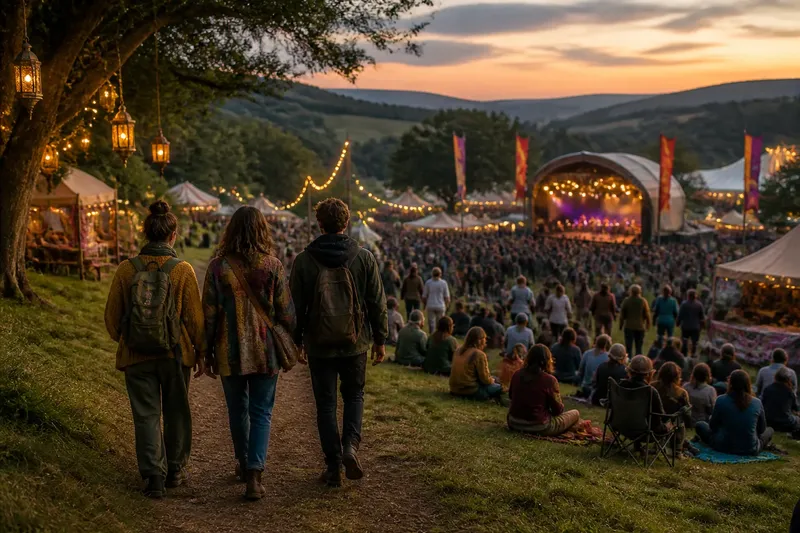
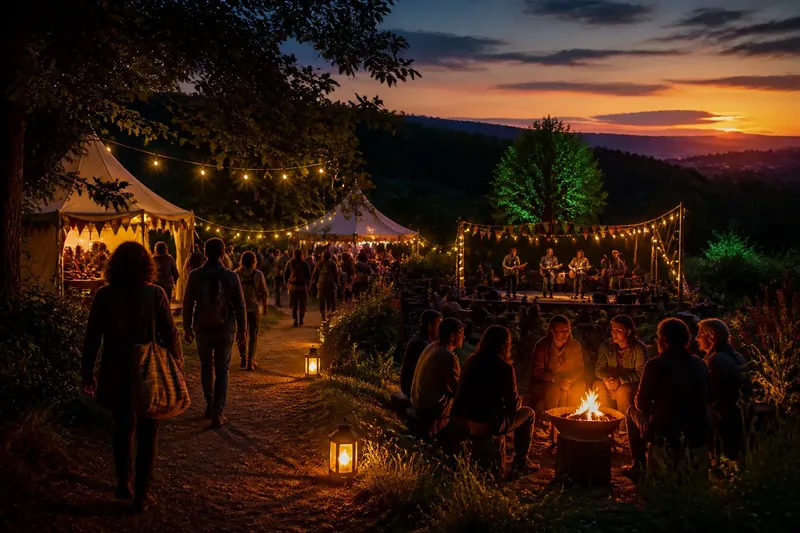
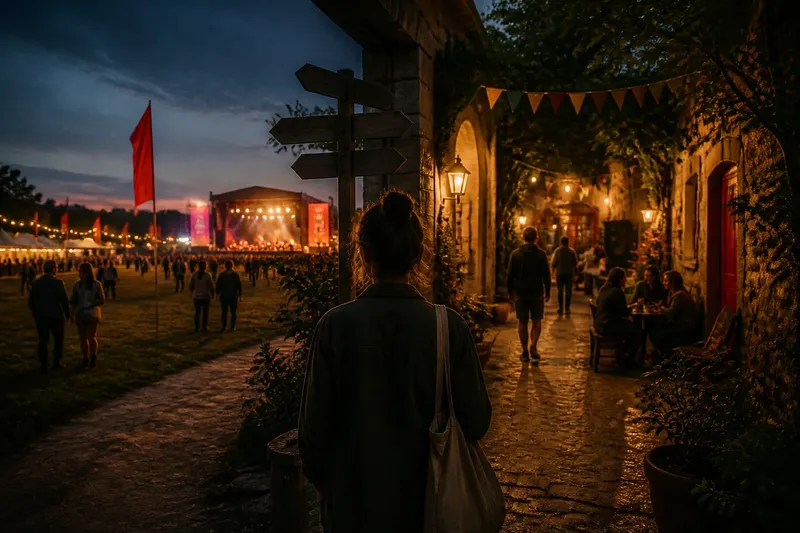
What should you wear to a festival? The answer depends less on a universal festival dress code than on the gathering in front of you: a dawn ceremony on a hillside, a family folk weekend and a late-night dance event invite different kinds of dress. A familiar festival look can be fun, but it is only one local visual language among many.
Festival dress codes grow from particular occasions
Clothes do more than keep out rain or make it easier to dance. At a festival, they can signal belonging, mark a special moment, express a host community’s identity or simply help a visitor feel ready for the day. Those meanings change with the setting, and sometimes between one part of the same event and another.
A daytime craft gathering may suit ordinary clothes that can take a little dust, while a formal procession might ask participants to wear a particular colour or type of garment. A night-time music event could encourage expressive styling, but that does not mean every attendee shares the same tastes. The event’s own customs matter more than a picture of festival fashion lifted from somewhere else.
It helps to treat dress like a place setting at a shared meal: the object is not to make every table identical, but to notice what this gathering asks of its guests. A useful outfit fits both the practical conditions and the social tone.
Three approaches suit different festival settings
Practical clothes for an open, active day
For a festival spread across a park, village green or outdoor site, comfort and adaptability often come first. Choose clothes that suit the likely weather and the activities you expect to join; sturdy shoes may make more sense than a delicate outfit if the programme involves walking between areas or standing on grass.
This approach suits families, day visitors and anyone who wants to move between performances, food stalls and workshops without fuss. It need not look plain. A bright scarf, a handmade badge or a jacket in a favourite colour can give an outfit personality without making costume the price of admission.
Expressive styling for a performance-led gathering
Some festivals make visual invention part of the pleasure. Attendees may use vivid colours, layered textures, glitter or playful accessories to echo the mood of the music and the crowd. Here, personal styling can act as a small contribution to a shared spectacle, much like a chorus of distinct voices rather than a single uniform.
This option suits people who enjoy dressing up and who have checked that the event welcomes that kind of expression. The important distinction is between an invitation to be imaginative and an expectation that everyone must adopt one particular look. A festival can be colourful without imposing a costume.
Community-specific dress for a ceremony or tradition
At a festival rooted in a particular community, dress may carry meanings that go beyond personal taste. A garment, colour or adornment might be connected to a ceremony, a role, a place or a shared history. Visitors should avoid treating these details as generic festival accessories.
This approach suits participants who belong to the tradition and understand its conventions. A guest can show respect through attentive, ordinary clothing when unsure, rather than borrowing ceremonial dress for atmosphere. If an invitation or host gives clear guidance, follow it; where meaning is not clear, ask an organiser before making assumptions.
Choose clothes by reading the gathering
When event images show one striking style, ask whether they represent the whole festival or a particular stage, performance or group. Look at the programme, the venue, the event’s own dress guidance and the way organisers describe the gathering. These clues can tell you whether dress is a practical matter, an expressive option or part of a specific custom.
Imagine you are attending a village festival with an afternoon craft workshop and an evening outdoor concert. You might choose comfortable clothes and walking shoes for the workshop, then add a colourful layer for the music. The result would respond to the change of occasion without pretending that one outfit represents every person at the event.
A simple choice process can help:
- Check whether the event names a dress expectation or asks for particular clothing.
- Notice whether the gathering is ceremonial, participatory, performance-led or mainly social.
- Consider the venue and activities, including walking, sitting outdoors or joining a workshop.
- Separate an optional style shown in promotional images from a stated requirement.
- If clothing may carry cultural or ceremonial meaning, ask the organiser rather than guessing.
- Choose one practical layer or accessory that lets you adapt without turning the outfit into a costume.
Use event guidance and clothing labels where they apply, and follow the host community’s instructions for any ceremonial setting. Local customs can vary, so a choice that feels appropriate at one festival may not carry the same meaning at another.
Festival dress code questions worth asking?
Do festivals have a dress code?
Some do, but many have no formal rule beyond ordinary venue or activity requirements. Check the event’s own information instead of assuming that photos of attendees show a required look.
What should I wear to a festival if I am unsure?
Start with comfortable clothes suited to the venue and the activities, then add a personal detail if you want to. If the event has a distinct community or ceremonial focus, ask the organiser about appropriate guest dress.
Is festival fashion the same as a festival dress code?
No. Festival fashion describes styles people choose, while a dress code is guidance or a requirement set by organisers or hosts. A popular look can be visible without being expected.
Can I wear traditional clothing to a festival?
If it is part of your own culture or the event explicitly invites it, it may be an appropriate choice. When a garment belongs to a tradition that is not yours, check its meaning and the host community’s guidance before wearing it.
Let the occasion, not a template, make the choice
The myth of a universal festival dress code persists because certain images travel easily: flower crowns, sequins, boots, bright prints. They can be enjoyable choices, but they do not define every gathering or every person attending it. Reading the event’s own setting and customs gives you a better starting point.
Think of your clothes as one small way to meet the festival on its terms. When the occasion is relaxed, dress for comfort; when it invites invention, bring your own version; when a tradition sets the tone, make room for its meaning. The most fitting outfit is the one that lets you take part without mistaking your style for everybody’s.